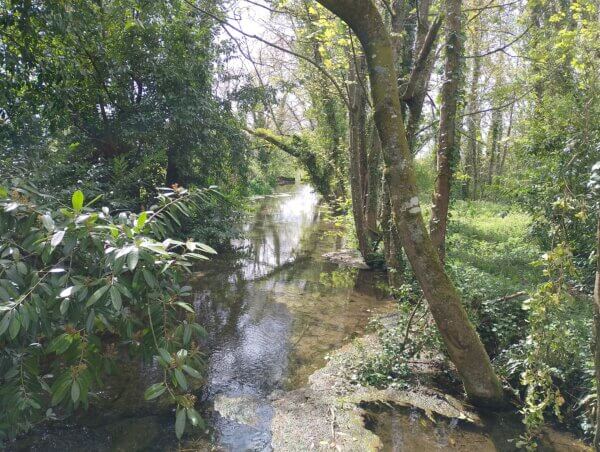
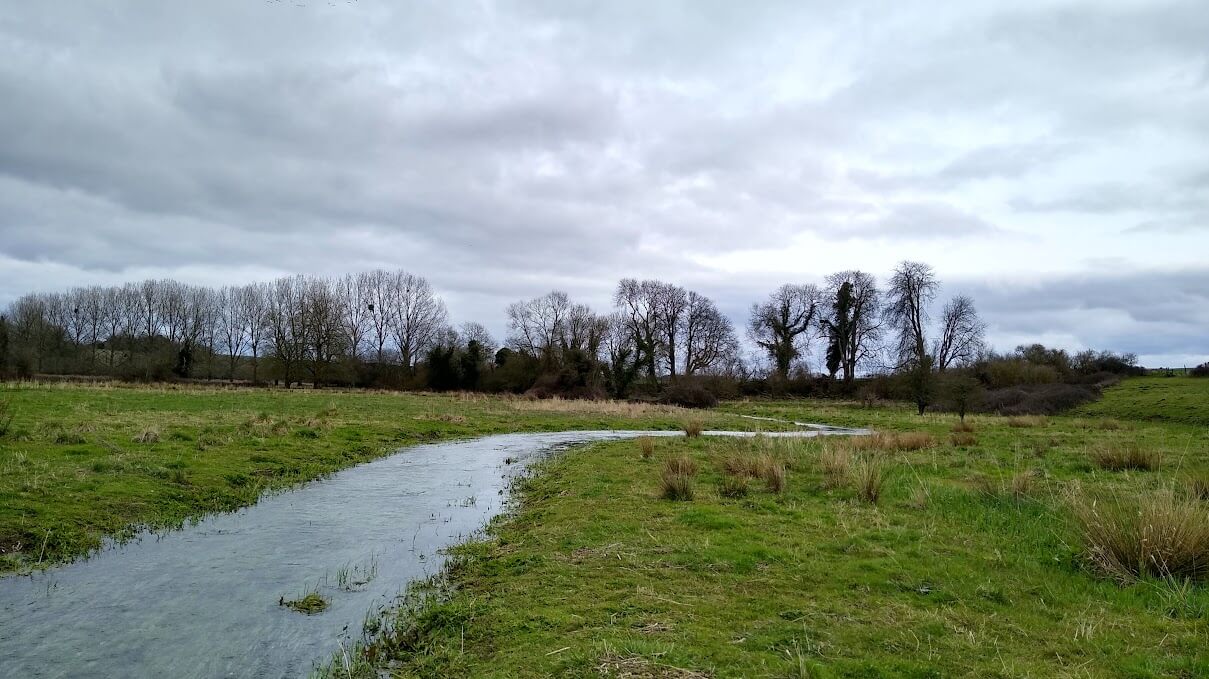
The significance of rivers plays out in the names of our towns – ‘mouth’ indicates where a river meets the sea; ‘ford’ is where the river is shallow enough to be crossed – and life grew up around them. Locally there is also the legend of the towns that were Piddle renamed to Puddle for HRH Queen Victoria (where Piddle is the Saxon word for clear water).
But what about the many ‘winterbournes or winterbornes’? Winterbourne Abbas, Winterborne Monkton, Winterborne St Martin, and Winterborne Zelston to name just a few. Again, it comes down to that vital resource – water. The word winterbourne is derived from Old English meaning a stream or brook that flows in the winter months.
Unique challenges and opportunities
Nature doesn’t shy away from a challenge, with specialist species around the world evolved to fill every unique habitat – and in a winterbourne chalk stream, that means adapting to make the most of both the wet, and dry seasons.
Specialist insects include the nationally rare Winterbourne stonefly (Nemoura lacustris) and Winterbourne black flies (Metacnephia amphora), that survive as dormant eggs in the sediment, hatching only when water and cool temperatures return. Then the race is on to grow and emerge as adults before the river runs dry again.
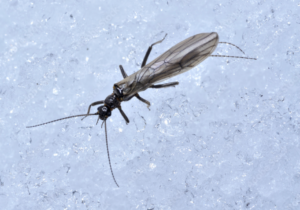
Winter stonefly. Adobe Stock image.
Winterbournes and The River Allen
Our beautiful chalk stream actually begins life as a winterbourne in Monkton Up Wimborne and is significant in the history of these unique species, being one of only two rivers where the Scarce purple dun mayfly (Paraleptophlebia werneri) was first recorded in 1939 (the other being the River Till).
Impact of the hot, dry summer…
This year’s spring and summer were special – in the Wessex area the period of March to October was the fifth driest period since records began in 1871. As a result, both ground water and river levels are lower than we would expect. What does this mean for winterbournes?
We need autumn and winter rainfall to recharge the chalk aquifer that feeds the winterbournes. With ground water levels below average it’s going to take a longer time for the water table to rise enough to emerge from the ground. It’s normal for the exact date for flow to resume to vary, but successive years of low ground water levels are likely to affect the ecology of the winterbournes in the long term. In the short term, low flows mean that pollutants and nutrients in the water are less diluted and these higher concentrations can harm aquatic life, cause algal blooms and lower dissolved oxygen levels.

A dry winterbourne. Candover Brook, Katherine Boler of Hampshire and Isle of Wight Wildlife Trust.
…Followed by heavy rain
The rains have returned, but these heavy deluges are also not helpful to our winterbournes. The sudden and powerful flow of water disturbs the fragile gravel beds and increases overflows and run off from potential sources of pollution. These more extremes of severe drought and flooding will become more common with climate change – so restoring natural flows and flood plains with projects like the River Allen Landscape Recovery are an essential part of protecting our winterbournes and their globally unique eco-systems.
A flowing winterbourne. River Allen, Alex Deacon from Wessex Rivers Trust.
Do you have a winterbourne near you? Is it bubbling back to life now? Share your local stories or photos — let’s celebrate these seasonal streams together.